Posting Your Partner on Social Media: Agree on Photos, Tags, and Privacy
A photo, its caption, and its audience can reveal different things. Make posting permissions specific enough to use, easy to decline, and open to change without a loyalty test.

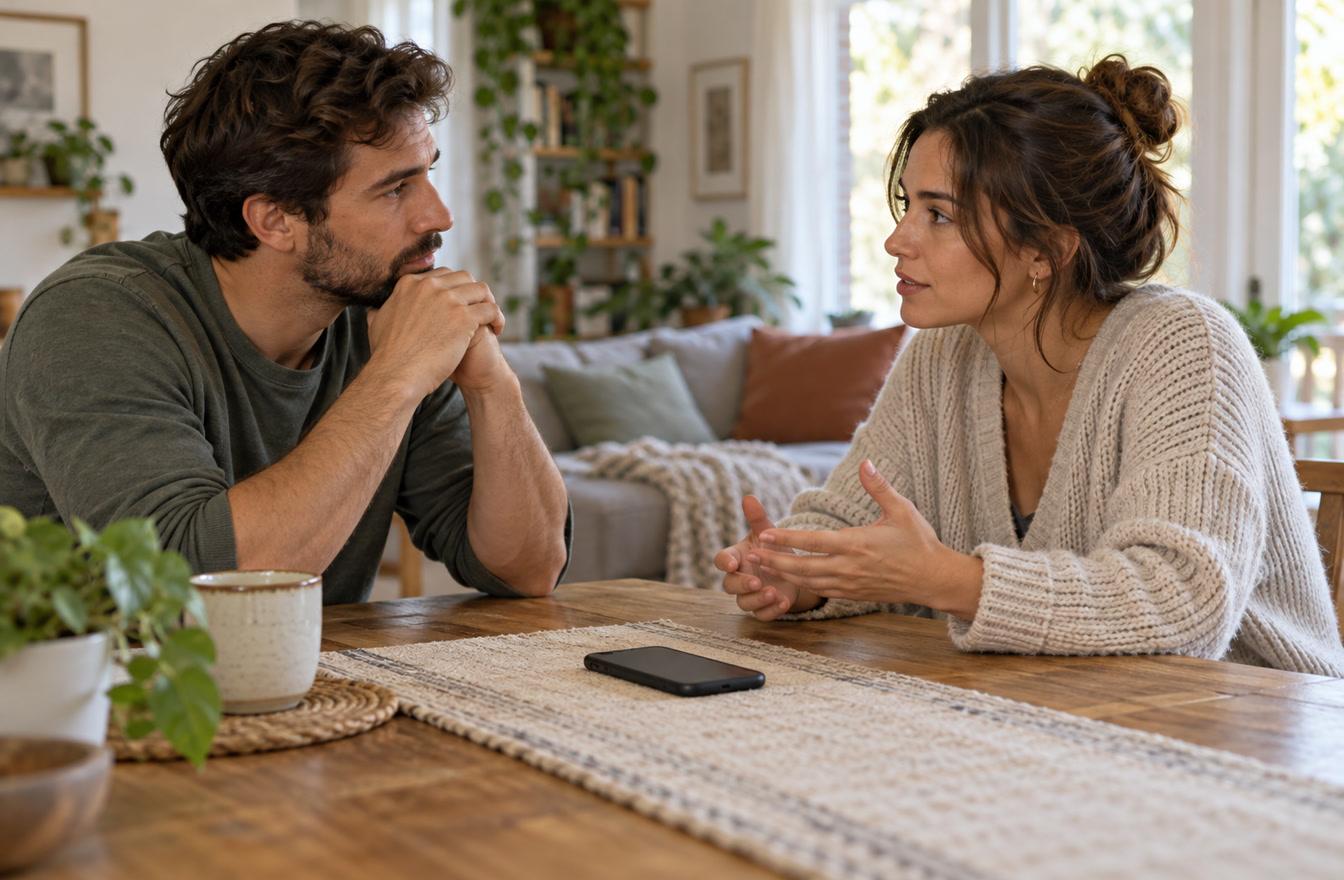
You post a photo because you like the moment. Your partner asks you to remove it because they did not want their face, location, or relationship status shared with that audience. You hear rejection. They hear that their privacy matters less than your intention.
Posting your partner on social media involves more than deciding whether the picture is flattering. A photo can disclose who someone is with, where they are, what they are doing, and how the relationship is described. A caption or tag can reveal something the image alone would not. Agreeing to be photographed is not necessarily agreeing to every use of the photograph.
You do not need identical posting habits. You do need a practical understanding of what each person is comfortable sharing and a way to respond when that comfort changes. The goal is not to require permission for your entire online life. It is to avoid publishing someone else's identifiable private life on the assumption that affection supplies consent.
Ask About the Post, Not Just the Picture
A useful request identifies what you want to share and with whom. “Can I put this photo on my public account with this caption and tag you?” gives your partner more information than “Can I post this?” Someone may welcome a picture in a small family chat and decline the same image on an account followed by colleagues or strangers.
Include the caption and timing when they matter. A photograph of a restaurant may be harmless on its own, while “our anniversary dinner” announces information the couple has not agreed to make public. A live location can reveal more than a post shared after you leave. Ask about the whole disclosure rather than treating these as cosmetic details.
The UK's Information Commissioner's Office advises getting people's consent before uploading their pictures or personal information and considering audiences beyond the intended one.[1] That is practical privacy guidance. It does not establish a universal legal rule that every ordinary couple photo requires a formal agreement in every jurisdiction.
A clear answer can be narrow: “That picture is fine in the family group, but please do not tag me or name the location.” Respect the actual scope instead of hearing only the yes. If the planned use changes, ask again rather than assuming approval carries across accounts, captions, and audiences.
Consent should also be easy to decline. Avoid asking in front of friends while already holding your finger over the post button. Give your partner a genuine chance to answer without making refusal feel like a public statement about whether they love you.
Separate Visibility From Relationship Recognition
Wanting to be acknowledged can be a real relationship need. Wanting privacy can also be real. The conflict becomes harder when either person treats a posting preference as complete evidence of the other's motives.
Ask what recognition would mean to you. Are you upset because nobody in your partner's life knows you exist, because an agreed relationship status is being concealed, or because they do not enjoy posting photos? Those are different concerns. A public photo might address one while leaving another entirely untouched.
Likewise, explain privacy at the relevant level without demanding that your partner guess. You may want boundaries between work and personal life, prefer not to share your face, or have reasons you do not want to discuss publicly. You can state what is off-limits without having to prove that the reason is serious enough.
Try: “I want to understand how you acknowledge our relationship in your life. I am not asking you to post a photo you do not want shared.” Or: “I am comfortable with people knowing we are together, but I do not want my account tagged.” These statements make room for a more precise agreement.
If the issue is access to messages or passwords, use the separate guide to device privacy without surveillance. Public disclosure and private device access are different permissions. Agreeing to a couple photo does not entitle anyone to inspect an account, and keeping messages private does not settle what a public caption should say.
Choose Defaults That Reduce Repeated Guessing
You do not need a contract for every casual picture. A few defaults can make ordinary decisions easier while preserving exceptions. For example, you might agree to ask before identifiable photos, avoid live locations, keep work and health details offline, and check captions that describe the relationship.
Decide which contexts need fresh approval. A public account, an employer-facing audience, a sponsored post, or a major announcement may differ from a familiar private group. A photo containing friends or children also involves people beyond the couple. Your partner cannot give permission on everyone else's behalf.
Keep the default specific enough to use. “Respect my privacy” may express the goal but leave the next poster guessing. “Please ask before posting my face or naming where we are” gives an observable boundary. The person asking should not have to anticipate every conceivable platform feature for the agreement to count.
The National Cyber Security Centre recommends thinking about what you post, who can access it, and what unnecessary details contribute to your digital footprint.[2] That supports checking the audience and information in a post. It does not mean a private account is risk-free or that removing a tag makes someone unidentifiable.
Review actual settings when useful, but do not turn the exercise into an account inspection. Each person can manage their own settings and describe the relevant audience. If you cannot explain who can see a post, pause before including someone else's personal information.
Also distinguish a reusable preference from permanent permission. Someone may have approved vacation photos last year and feel differently now. A change deserves a conversation about future posting, not an accusation that they are rewriting the relationship. The default should reduce guessing, not eliminate the right to reconsider.
Check the Details That Tell More Than You Intended
Before posting, look beyond the main subject. A work badge, address, school name, travel document, screen, or recognizable view can disclose details neither of you meant to share. Cropping or choosing another image may be more sensible than trying to debate whether anyone will notice.
Do the same with captions and comments. You might agree not to name a location and then answer a friend's question with the exact venue. You might omit a relationship label from the caption while relatives add it in the comments. You cannot control every response, but you can decide what you will disclose and how you will handle predictable follow-up questions.
The ICO cautions that once information is online, control over what happens to it is limited.[1] That is why “I can always delete it” should not substitute for asking first. Removing a post can matter, but it cannot promise that nobody saw, saved, or shared it.
Consider a hypothetical example: you want to post a photo from a celebration before your partner has told their employer about a life change. The picture itself may not announce anything, but a caption or comment could. Ask whether the timing is welcome. Delaying a post is often a simpler option than expecting your partner to manage disclosure they did not choose.
Avoid including intimate images or sensitive health, financial, or identity information in an ordinary-photo agreement. These disclosures have different stakes and may involve specific laws and platform rules. Never assume that consent to take or receive an intimate image authorizes sharing it. If sharing is unwanted, threatening, or coercive, seek appropriate specialist support rather than treating it as a routine posting disagreement.
Respond to a Removal Request Before Defending the Intention
If you posted something your partner did not want shared, begin with the specific concern. “I did not realize that caption disclosed something you were keeping private” is more useful than “Everyone thought it was cute.” Popularity does not settle permission.
When it is safe and practical, remove or restrict the post you control and confirm what you changed. Do not repost a cropped version, move it to another platform, or ask friends to share it instead without discussing that new use. Those actions may preserve the very disclosure the person wanted stopped.
Then ask what needs attention beyond your own post. Was it cross-posted? Did you tag someone else? Did another person repost it? You can request removal where appropriate, but do not promise complete erasure from the internet. Be clear about what you can control and what remains uncertain.
UK ICO guidance on the right to erasure explains that requests to organizations apply in specified circumstances and have exceptions.[3] The guidance is currently marked as under review. It should not be read as a worldwide guarantee that a platform must delete every copy or that the same rules apply to a partner's personal account. Legal options depend on location and context; seek qualified advice when needed.
Do not demand that your partner prove harm before you take an unwanted ordinary post seriously. You can discuss how to avoid confusion next time after addressing the immediate request. An apology is stronger when it names the mistaken assumption and the change you will make, rather than arguing that a caring motive should have been enough.
Handle an Audience That Wants More Than You Want to Share
Friends or relatives may ask why you do not post together, why someone is untagged, or whether a missing picture means something happened. You do not owe them a detailed relationship report. Agree on a response that does not reveal the privacy concern you are trying to protect.
You might say, “We keep some things offline,” or simply decline to explain. Avoid blaming your partner for being secretive or controlling when the actual agreement is that certain details remain private. If you disagree with the agreement, discuss it with them rather than polling your followers.
The same principle applies to milestones. Engagements, pregnancies, moves, and breakups can involve other people and sensitive timing. Decide who needs to hear directly, who may share, and when public posting is welcome. Do not use a surprise announcement to force a commitment or make an unresolved decision look settled.
If an online interaction raises a separate concern about fidelity, discuss the relationship boundaries you have actually agreed to rather than treating a public photo as proof of faithfulness. Keep the posting question distinct: does the person want this audience involved? Enthusiasm is not permission, even when the post is affectionate.
If your partner repeatedly disregards clear limits, name the conduct rather than debating whether social media is important in general. “I asked you not to post my workplace, and you did it again” is a concrete concern. If requests lead to threats, exposure, or fear, prioritize specialist support through a channel you believe is safer; a better caption agreement is not an adequate response to coercion.
FAQ
Does My Partner's Refusal to Post Me Mean They Are Hiding Me?
Not by itself. Ask about how the relationship is acknowledged in their life and what privacy they want online. A low-posting habit, a specific audience boundary, and concealment that contradicts your relationship agreement are different situations. A single photo cannot resolve all of them.
Do We Need to Ask Before Every Photo?
You can agree on defaults for ordinary situations, with fresh permission for different audiences, sensitive details, or major announcements. Keep the agreement revisable. Approval of one image or one context should not silently expand into unlimited permission to publish the other person's life.
What if the Post Is Already Public?
Address the unwanted disclosure where you can: remove or restrict your own post, check cross-posts, and discuss requests to others where appropriate. Be honest that deletion cannot guarantee nobody retained a copy. If the situation involves threats or sensitive images, seek specialist advice rather than relying on a general couple conversation.
Is a Private Account Enough Protection?
It can limit the audience according to the platform's settings, but it does not eliminate the need to ask about sharing another person's information. Followers can still see the content and may copy or discuss it. Check actual settings and avoid promising privacy you cannot guarantee.
Research References
- 1. Information Commissioner's Office (n.d.). Online Safety. Recommends consent before uploading others' pictures and consideration of audiences and loss of control over shared information.
- 2. National Cyber Security Centre (2019, reviewed 2022). Social Media: How to Use It Safely. Supports reviewing audiences, privacy settings, and unnecessary information in a digital footprint.
- 3. Information Commissioner's Office (n.d.). Your Right to Get Your Data Deleted. Describes the scope and exceptions of UK erasure requests to organizations, not guaranteed removal of every online copy.
Get the next essay.
One careful essay, every other Monday.